We press think before build
We start by understanding the problem, the systems already in place and how things can go wrong. Then we design, engineer and, when it helps, stay to run and improve what we made.
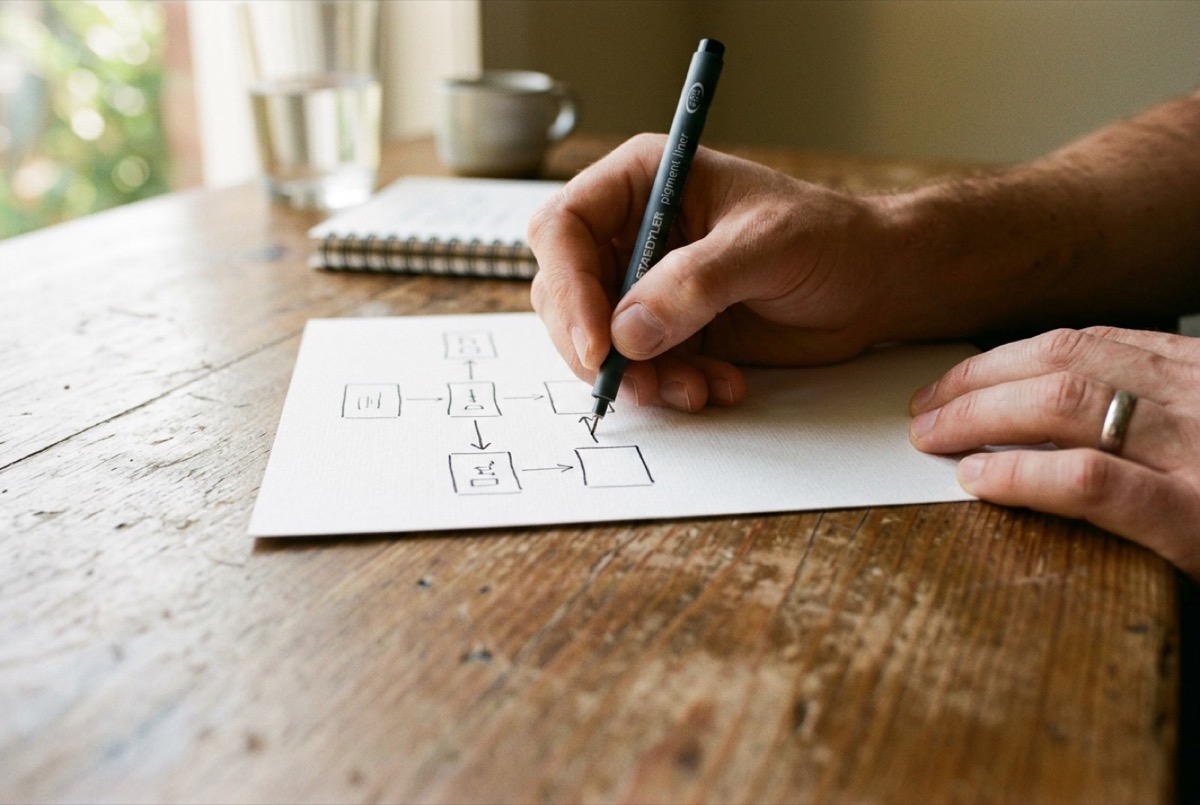
- think
Think before build
The cheapest line of code is the one you did not need to write.
- small
Small, working steps
Something real in front of people early, then better every week or two.
- write
Written down
Decisions, with their reasons, so anyone can follow them later.
- run
Engineered to be run
Monitoring, alerts and a runbook are part of the job, not extras.
From your first message to a system that runs
- 1
You tell us what you need
Through Get started or by email.
- 2
Discovery
The problem, the people and what "done" means. It can end in "not yet".
- 3
A written quote
What it covers, what it does not, and a range.
- 4
Sprints
One or two weeks each, on a copy of the real thing.
- 5
Launch, then run
A clean handover, or we stay and run it.
Four ways to work with us
Discovery or a review
A fixed scope and a fixed price. You leave with a written brief or report, whoever builds next.
A fixed project
For work that can be scoped tightly: a website, an automation, an integration. One quote, one price.
Sprints
For products that will change as you learn. Sprints of one or two weeks, with a demo every time.
Run and improve
A monthly agreement to run, secure and improve what is live, with agreed hours for changes.
Questions people ask
Is discovery always needed?
For new build work, yes, in some form. Ongoing work on a system we already know can skip a formal pass.
What if discovery shows a poor fit?
We say so plainly. Deciding not to build is a useful outcome.
Can you work with our existing systems and team?
Yes. New work is designed around the systems you already run, and we usually work alongside your own people.
Who owns the code?
The quote says, in writing. For work we engineer for you, the usual answer is you.